
드라마 명대사를 한국어 어원으로 살펴보기 – 미스터 선샤인 ‘쿠도 히나’편 1
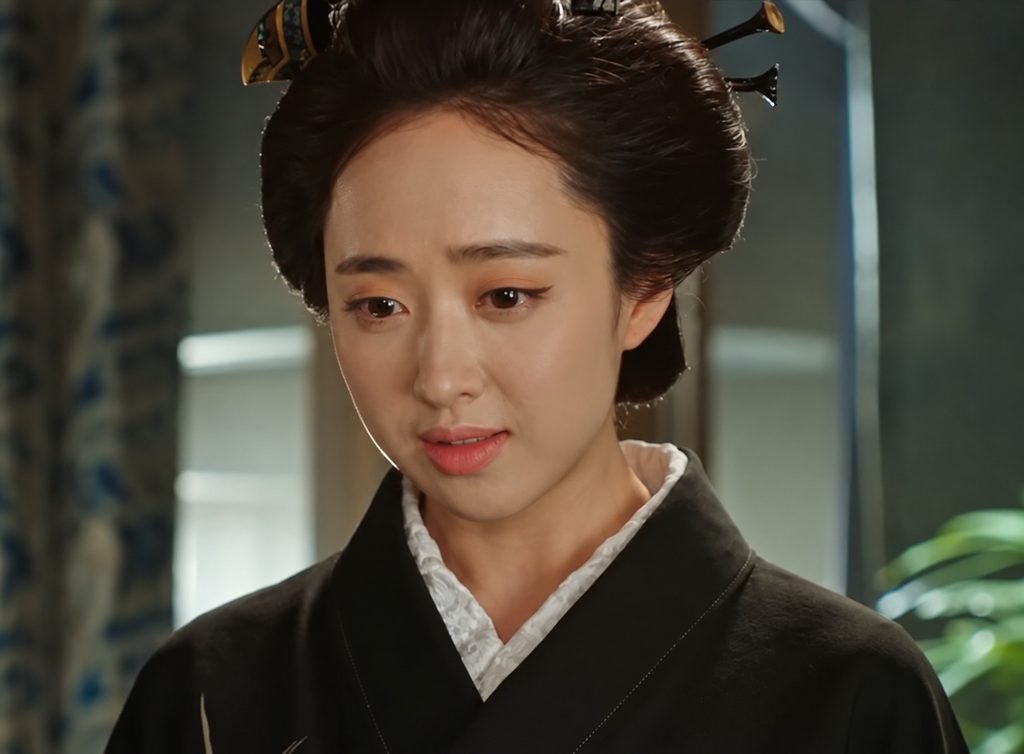
“그깟 잔이야 다시 사면 그만. 나는 네가 더 귀하단다. 그러니 앞으로 어느 누구든 누가 너를 해하려 하면, 울기보단 물기를 택하렴. “
간략한 장면 설명(해당 장면 보기)
장소는 쿠도 히나가 사장으로 있는
빈관
빈관 (賓館)
손님을 접대하거나 묵게 하기 위해 마련한 건물.
English Meaning
A guesthouse or lodging establishment for receiving and accommodating guests.
‘글로리’에서 벌어졌습니다.
빈관에서
가배
가배 (珈琲)
개화기 무렵 한국에서 커피를 가리키던 말. 당시에는 ‘가배’, ‘가비’ 등으로 불렸습니다.
English Meaning
An old Korean term for coffee, used around the late 19th and early 20th centuries.
를 마시던 남성이 지나가던 여자 종업원인 귀단의 손을 붙잡고 하룻밤이 얼마냐고 물었습니다.
귀단은 자신은
창기
창기 (娼妓)
과거에 돈을 받고 성을 파는 여성을 가리키던 말. 오늘날에는 낡고 비하적으로 들릴 수 있는 표현입니다.
English Meaning
An old term referring to a woman who engaged in prostitution. Today, the term is considered outdated and can sound derogatory.
가 아니라
여급
여급 (女給)
과거에 식당, 카페, 술집 등에서 손님을 응대하거나 음식을 나르던 여성 종업원을 가리키던 말입니다.
English Meaning
An old term for a female server or attendant who served customers in places such as restaurants, cafés, or drinking establishments.
이라고 대답했지만 남자는 손을 놔주지 않았습니다.
이 때 쿠도 히나가 나타나
찻잔받침
찻잔받침
찻잔이나 커피잔 아래에 받쳐 놓는 작은 접시를 뜻합니다.
English Meaning
A small plate placed under a teacup or coffee cup. In English, it is called a saucer.
을 깨트린 뒤 나온 조각으로 남자의 손을 베어버립니다.
남자는 손이 베인 뒤 화를 내지만 같이 있던 동료의
만류
만류 (挽留)
어떤 일을 하지 못하도록 말리거나 붙잡는 것을 뜻합니다.
English Meaning
To stop or discourage someone from doing something, especially by persuading them not to act.
에 빈관을 나갑니다.
Brief Scene Description (Watch the Scene)
The scene takes place at “Glory,” a guesthouse (빈관) owned by Kudo Hina.
At the guesthouse, a man drinking coffee (가배) grabbed the hand of a female employee passing by and asked her how much she charged for the night.
Gwi-dan replied that she was not a prostitute (창기) but a female attendant (여급), but the man refused to let go of her hand.
At that moment, Kudo Hina appeared, smashed a saucer (찻잔받침), and used one of the broken pieces to cut the man’s hand.
The man became angry after his hand was cut, but his companion persuaded him to stop (만류), and he left the guesthouse.
그리고 귀단은 울면서 바닥에 깨진 찻잔받침을 보며 말합니다.
“어째요? 저 때문에… 이 귀한 걸… 죄송합니다.
아씨
아씨
과거에 젊은 양반집 여성을 높여 부르던 말입니다. 집안의 하인이나 아랫사람이 젊은 여주인이나 집안의 딸을 부를 때 사용하기도 했습니다.
English Meaning
A respectful old Korean term used to address a young woman of a noble or upper-class family. Depending on the context, it can be similar to “young lady” or “miss.”
”
And Gwidan, crying, looks at the broken saucer on the floor and says:
“What should I do? Because of me… Such a precious thing… I’m sorry, miss.”
‘어째’의 어원
‘어째’는 ‘어찌하여’가 줄어든 말입니다.
‘어찌’는 ‘어떻게’ 또는 문맥에 따라 ‘왜’의 의미를 나타내는 오래된 한국어 표현입니다.
시간이 흐르면서 일상적인 말에서는 긴 형태인 ‘어찌하여’보다 짧은 ‘어째’가 자연스럽게 사용되게 되었습니다.
어찌하여 → 어째
어찌하여서 → 어째서
따라서 ‘어째요?’는 문맥에 따라 “어떻게 해요?”, “어떡하죠?”처럼 상대에게 방법을 묻거나 난처함을 나타낼 수도 있고, “왜 그래요?”처럼 이유를 묻는 느낌으로 사용될 수도 있습니다.
The Etymology of “어째“
“어째” is related to the older Korean word “어찌,” which means “how,” or depending on the context, “why.”
In everyday Korean, “어째” is commonly used in expressions related to “어찌” and “어찌하여.”
어찌하여 → 어째
어찌하여서 → 어째서
Depending on the context, “어째요?” can be used to ask what to do or to express worry or distress, similar to “What should I do?” or “What am I going to do?”
“어째” can also be used to ask for a reason, with a meaning closer to “Why?” or “How come?”
이 때 유명한 명대사가 나옵니다.
쿠도 히나는 울고 있는 귀단을 쳐다보면서 말합니다.
“그깟 잔이야 다시 사면 그만. 나는 네가 더 귀하단다. 그러니 앞으로 어느 누구든 누가 너를 해하려 하면, 울기보단 물기를 택하렴. “
This is where one of the most famous lines comes in.
Kudo Hina looks at the crying Gwidan and says,
“It’s only a cup. I can always buy another one. You are far more precious to me. So from now on, if anyone ever tries to hurt you, choose to bite rather than cry.”
‘그깟’의 어원
‘그깟’은 ‘그’와 ‘깟’이 결합하여 만들어진 말입니다.
‘그’는 대상을 가리키는 지시어이고, ‘깟’은 어떤 정도나 범위를 한정하는 의미를 나타내는 ‘까지’와 관련이 있습니다.
‘그’ + ‘깟’ → ‘그깟’
본래 ‘그깟’에는 ‘그 정도밖에 안 되는’ 또는 ‘그 정도의 것’이라는 의미가 담겨 있습니다.
명사 앞에 쓰이며, 말하는 사람이 어떤 것을 작거나 대수롭지 않거나 크게 신경 쓸 만하지 않은 것으로 여긴다는 뜻을 나타냅니다.
예를 들어,
‘그깟 잔이야 다시 사면 그만.’
→ “그저 잔 하나일 뿐이야. 다시 사면 돼.”
여기서 ‘그깟’은 잔을 대수롭지 않은 것으로 여기며, 걱정할 만큼 중요한 것이 아니라는 의미를 강조합니다.
The Etymology of “그깟”
“그깟” is formed from “그” and “깟.”
“그” is a demonstrative meaning “that,” while “깟” is related to “까지,” a word that can carry the sense of limiting something to a certain degree or extent.
“그” + “깟” → “그깟”
Originally, “그깟” carries the sense of “only that much” or “something of that degree.”
It is used before a noun to show that the speaker considers something small, insignificant, or not worth worrying about.
For example:
“그깟 잔이야 다시 사면 그만.”
→ “It’s only a cup. I can always buy another one.”
Here, “그깟” emphasizes that the cup is not important enough to worry about.
‘귀하다’ 어원
‘귀하다’는 한자어가 아니라 오래전부터 쓰인 고유어 ‘귀하다’에서 온 말입니다. 다만 현대의 ‘귀하다’는 여러 의미가 있어서, 어원을 설명할 때는 ‘귀(貴) + 하다’로 보는 것이 정확합니다.
‘귀하다’의 ‘귀’는 한자 ‘貴(귀할 귀)’에서 왔습니다. ‘貴’에는 ‘값지다’, ‘존귀하다’, ‘소중하다’, ‘높은 지위에 있다’라는 뜻이 있습니다.
‘貴(귀)’ + ‘하다’ → ‘귀하다’
그래서 ‘귀하다’는 본래 ‘가치가 높다’, ‘존귀하다’라는 뜻을 나타내며, 여기에서 ‘소중하다’, ‘쉽게 얻기 어렵다’라는 의미로도 넓어졌습니다.
예를 들어,
‘나는 네가 더 귀하단다.’
→ “You are more precious to me.”
여기서 ‘귀하다’는 ‘비싸다’는 뜻이 아니라, 상대방을 매우 가치 있고 소중한 존재로 여긴다는 의미입니다.
The Etymology of “귀하다”
“귀하다” comes from “귀 (貴)” and “하다.”
“귀 (貴)” comes from the Chinese character “貴,” which carries meanings such as “valuable,” “precious,” “noble,” or “of high status.”
“귀 (貴)” + “하다” → “귀하다”
Originally, “귀하다” means “to be valuable” or “to be precious.” Over time, it also came to be used for something or someone that is cherished, highly valued, or difficult to obtain.
For example:
“나는 네가 더 귀하단다.”
→ “You are more precious to me.”
Here, “귀하다” does not mean “expensive.” It means that the person is considered very valuable and precious.
해하다 어원
‘해하다’는 한자 ‘害(해칠 해)’에 ‘하다’가 붙어서 만들어진 말입니다.
‘해(害)’ + ‘하다’ → ‘해하다’
‘害’는 ‘해치다’, ‘손상을 입히다’, ‘나쁜 영향을 주다’라는 뜻을 가진 한자입니다.
따라서 ‘해하다’는 사람이나 대상에게 해를 끼치거나 다치게 한다는 뜻입니다. 일상적인 ‘해치다’보다 다소 문어적이고 격식 있는 표현입니다.
예를 들어,
‘누가 너를 해하려 하면’
→ “If anyone tries to harm you”
여기서 ‘해하려’는 ‘해하다’가 활용된 형태로, ‘너에게 해를 끼치려고 하다’라는 의미입니다.
The Etymology of “해하다”
“해하다” is formed from “해 (害)” and “하다.”
“해 (害)” comes from the Chinese character “害,” which means “harm,” “damage,” or “injury.”
“해 (害)” + “하다” → “해하다”
Therefore, “해하다” means to harm, hurt, or cause damage to someone or something. It is somewhat more formal and literary than the everyday Korean word “해치다.”
For example:
“누가 너를 해하려 하면”
→ “If anyone tries to harm you”
Here, “해하려” is a conjugated form of “해하다,” meaning “to try to cause harm to you.”
‘택하다’ 어원
‘택하다’는 한자 ‘擇(가릴 택)’에 ‘하다’가 붙어 만들어진 말입니다.
‘택(擇)’ + ‘하다’ → ‘택하다’
‘擇’은 여러 가지 가운데 하나를 ‘고르다’, ‘가리다’, ‘선택하다’라는 뜻을 가진 한자입니다.
따라서 ‘택하다’는 여러 대상이나 방법 가운데 하나를 골라 선택한다는 뜻입니다.
예를 들어,
‘울기보단 물기를 택하렴.’
→ “울기보다는 무는 것을 선택하렴.”
여기서 ‘택하다’는 두 가지 행동, 즉 ‘우는 것’과 ‘무는 것’ 가운데 ‘무는 것’을 선택한다는 의미로 사용되었습니다.
The Etymology of “택하다”
“택하다” is formed from “택 (擇)” and “하다.”
“택 (擇)” comes from the Chinese character “擇,” which means “to choose,” “to select,” or “to pick” from among several options.
“택 (擇)” + “하다” → “택하다”
Therefore, “택하다” means to choose or select one option from among several possibilities.
For example:
“울기보단 물기를 택하렴.”
→ “Choose to bite rather than cry.”
Here, “택하다” means choosing one of two actions—crying or biting. In this sentence, the speaker is telling her to choose biting instead of crying.
다음과 같은 표현으로 사용할 수 있습니다.(Usage Examples)
그깟 실수 하나 때문에 너무 걱정하지 마.
→ Don’t worry too much about such a small mistake.
그깟 돈 때문에 친구를 잃고 싶지는 않아.
→ I don’t want to lose a friend over a little money like that.
나에게는 무엇보다 가족이 귀해.
→ My family is more precious to me than anything else.
오랜 시간 함께한 물건이라 내게는 아주 귀해.
→ I’ve had it for a long time, so it is very precious to me.
그는 돈보다 자신의 꿈을 택했어.
→ He chose his dream over money.
나는 포기하는 대신 다시 도전하기를 택했어.
→ I chose to try again rather than give up.
누구도 다른 사람을 함부로 해해서는 안돼.
→ No one should harm another person.
그는 자신을 해하려는 사람을 피해 도망쳤어.
→ He ran away from someone who was trying to harm him.
그깟 자존심 때문에 귀한 사람을 놓치지 마.
→ “Don’t lose someone precious over something as trivial as pride.”
남을 해하는 길보다 서로를 돕는 길을 택해야 해.
→ “We should choose the path of helping one another rather than harming others.”
대사를 통해 보는 쿠도 히나의 삶
오늘 배운 대사에서는 쿠도 히나가 살아온 삶을 엿볼 수 있습니다.
그녀는 친일파인 아버지로 인해 어린 나이에 늙은 거부에게 시집을 가야만 했고, 어머니는 조선인이라는 이유로 아버지에게 내쳐졌습니다.
그래서 어릴 때부터 우는 것보다 무는 것을 택하는 삶을 살아왔습니다.
그렇기에 귀단에게 건넨 “울기보단 물기를 택하렴”이라는 말은 단순한 충고가 아닙니다.
자신을 지키기 위해 강해져야 했던 쿠도 히나 자신의 삶이 담긴 말이기도 합니다.
또한 깨진 찻잔받침보다 귀단이 더 귀하다고 말하는 장면에서는 사람을 물건보다 소중하게 여기는 쿠도 히나의 모습을 볼 수 있습니다.
짧은 대사이지만, ‘그깟’, ‘귀하다’, ‘해하다’, ‘택하다’와 같은 한국어 표현의 의미를 이해하고 나면 쿠도 히나가 왜 이런 말을 했는지 더 깊이 이해할 수 있습니다.
The Life of Kudo Hina Through Her Words
In the lines we learned today, we can catch a glimpse of the life Kudo Hina has lived.
Because of her pro-Japanese father, she was forced to marry a wealthy old man at a young age, and her mother was cast out by her father because she was Korean.
So from a young age, she lived a life in which she chose to bite rather than cry.
That is why the words she says to Gwidan, “Choose to bite rather than cry,” are more than just advice.
They also reflect Kudo Hina’s own life and how she had to become strong in order to protect herself.
Also, in the scene where she tells Gwidan that Gwidan is more precious to her than the broken saucer, we can see that Kudo Hina values people more than material things.
Although it is a short line, understanding the meanings of Korean expressions such as “그깟,” “귀하다,” “해하다,” and “택하다” allows us to understand more deeply why Kudo Hina said these words.